Is Grading on Reno Construction Sites Done Before Utilities
Most contractors think site prep is just about moving dirt around. Flatten the lot, call it done. But the sequence matters more than you'd think — and if you skip steps or flip the order, you're setting yourself up for headaches. Grading and utility work aren't interchangeable. They're connected, and the timing of each can make or break your timeline, your budget, and your ability to pass inspection.
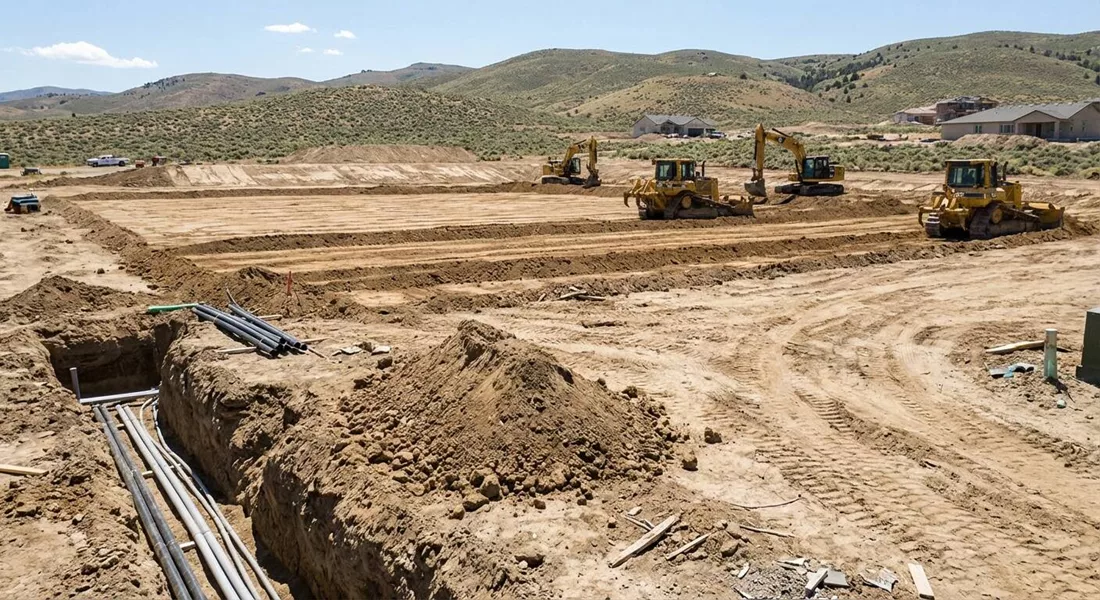
So here's what you need to know. If you're developing land in Reno, grading almost always comes first. That's not a suggestion — it's how the work flows when you want utilities installed right, drainage handled properly, and inspectors off your back. Every trench should sit at the correct elevation. Every pipe needs a stable base. And every decision about sequencing should be grounded in how the site will function long-term, not just how fast you can get equipment on-site.
What Grading and Utilities Actually Mean
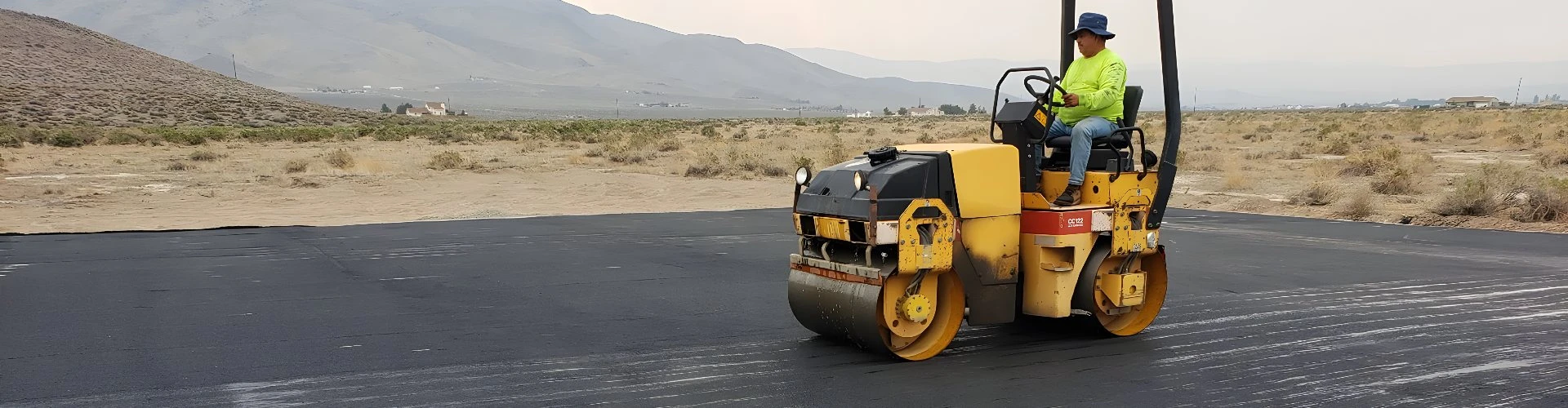
Grading isn't just bulldozing. It's the process of shaping land to establish final elevations, create proper slopes, and prepare a stable foundation for everything that comes next. You're moving soil, compacting fill, and ensuring water moves away from structures instead of pooling where it shouldn't. Utilities are the underground lifelines — water, sewer, gas, electric, telecom. Installing them means trenching, laying pipe or conduit, and backfilling with precision.
These two tasks aren't independent. Grading sets the stage. Utilities follow the script. Flip that order, and you're asking for rework, damaged lines, or drainage problems that won't show up until the first storm hits.
Why Grading Happens First
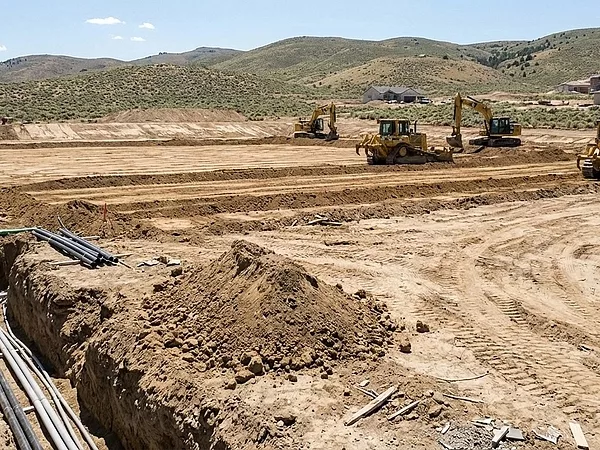
On nearly every Reno construction site, grading precedes utility installation. That's not arbitrary — it's the only way to ensure the work holds up. Once the land is shaped and compacted, you know exactly where utilities need to go and at what depth. Gravity-fed systems like sewer lines depend on precise slopes. You can't calculate those slopes until the ground is where it needs to be.
Heavy machinery used for grading doesn't play nice with freshly installed pipes. Run a dozer over a site with utilities already in place, and you're looking at crushed conduit, shifted pipe, or worse. Safety risks multiply when workers are operating around buried lines they can't see. Grading first keeps the site clear, the work efficient, and the crew out of danger.
- Establishes final elevations: You can't set utility depths without knowing where the finished grade will be.
- Prevents damage to infrastructure: Heavy equipment and buried pipes don't mix well.
- Ensures proper drainage: Grading directs water flow before trenches are cut, reducing erosion and settlement risks.
- Meets local code requirements: Reno and Washoe County have specific standards for site prep that must be met before utilities go in.
- Streamlines inspections: Inspectors verify grading compliance before utility work begins, avoiding costly do-overs.
When the Standard Order Gets Adjusted
There are exceptions. Some projects require temporary utilities during construction — power for trailers, water for dust control. In those cases, you might see rough utility runs before final grading. But those are interim measures, not the permanent installation. Once the site is fully graded, the real utility work begins.
Reno's terrain throws curveballs. Rocky slopes, existing structures, or phased development can force a modified approach. Contractors might rough-grade first, install utilities, then finish grading to account for actual site conditions. That's not sloppy — it's adaptive. But even in those scenarios, the principle holds: you don't finalize utilities until you know where the ground will end up.
Coordination Keeps the Project Moving
Grading and utility installation aren't solo acts. Surveyors, civil engineers, and utility contractors need to be on the same page from day one. Detailed site plans, accurate grading permits, and up-to-date utility maps are non-negotiable. Miss a step in coordination, and you're looking at delays, rework, or worse — a failed inspection that shuts everything down.
In Reno, you're also dealing with local utility providers and municipal requirements. Permits don't issue themselves. Inspections don't happen on your schedule. Skipping the correct sequence or ignoring required approvals can cost you weeks and thousands of dollars. We've seen projects stall because someone assumed grading could wait. It can't.
The Payoff for Getting It Right
Following the standard sequence — grading before utilities — isn't just about checking boxes. It's about protecting your investment and avoiding problems that compound over time. A properly graded site means utilities sit at the right depth, trenches don't flood, and inspectors sign off without drama.
- Minimizes damage risk: Utilities installed after grading stay intact through the rest of construction.
- Improves long-term drainage: Water flows where it should, not into utility trenches or around foundations.
- Ensures accurate placement: Final elevations are locked in, so utility depths and slopes are precise.
- Speeds up approvals: Inspectors can verify grading and utility work in the correct order, keeping the project on track.
- Reduces costly rework: Getting the sequence right the first time saves time, money, and frustration.
What Happens When You Skip Steps
Try to install utilities before grading is finalized, and you're gambling. Pipe depths might be wrong. Slopes might not drain. Heavy equipment might crush lines you just paid to install. And when the inspector shows up, you'll be explaining why the site doesn't match the approved plans.
Reno's building officials don't have patience for shortcuts. Neither do utility providers. If your sequencing is off, expect stop-work orders, permit delays, and a lot of expensive backtracking. The cost of doing it right the first time is always lower than the cost of fixing it later.
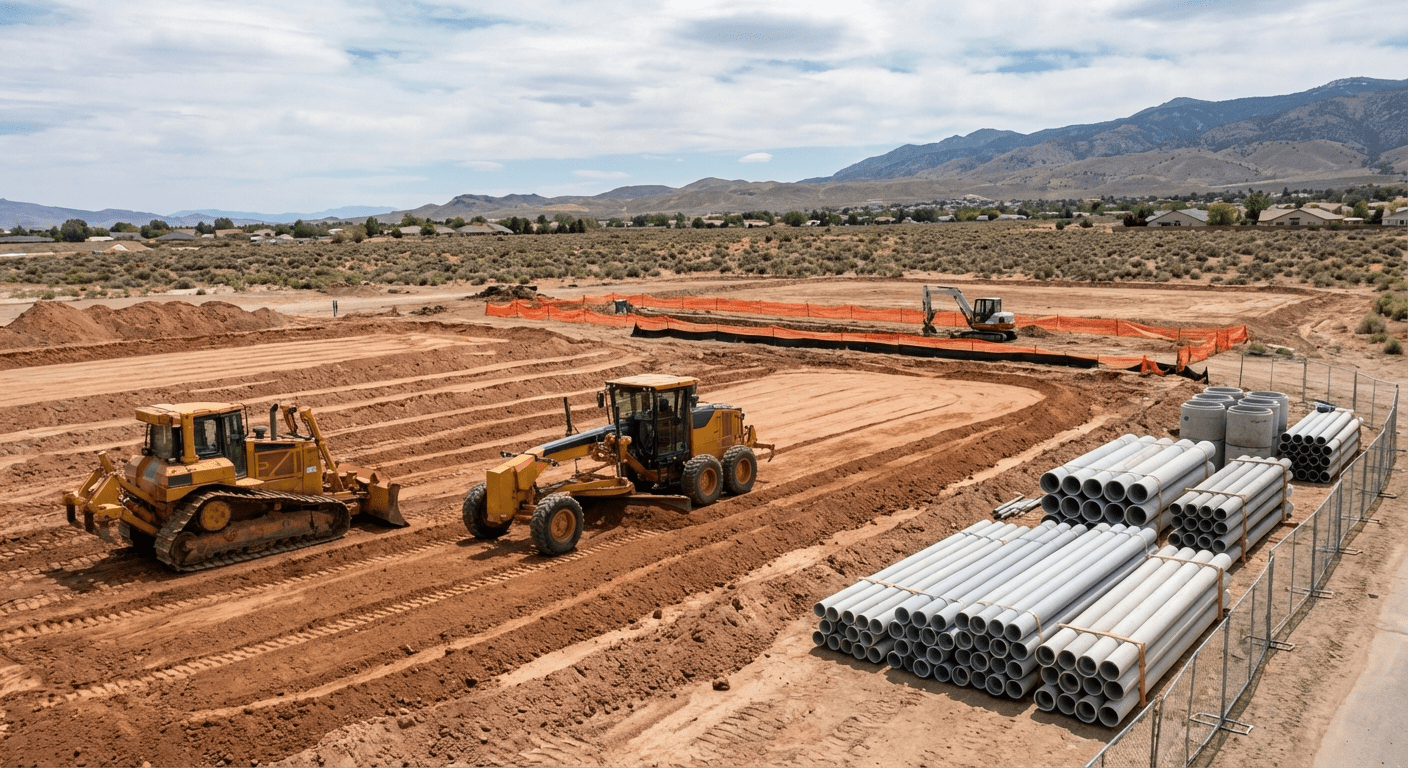
Documentation Backs Up Every Decision
Want to keep your project moving? Show your work. Grading plans, utility maps, compaction test results, and inspection records should all be organized and accessible. If a question comes up — and it will — you need to be able to prove the work was done in the right order and to the right standards.
- Approved grading plans: Signed off by the city or county before work begins.
- Utility coordination agreements: Confirming depths, locations, and installation schedules.
- Compaction test results: Proving the site is stable before utilities go in.
- Inspection records: Documenting that each phase was completed and approved before the next began.
- As-built drawings: Showing final conditions for future reference and maintenance.
Common Mistakes That Slow Projects Down
We've seen contractors rush into utility work before grading is done, thinking they'll save time. They don't. They lose time when pipes have to be relocated, trenches have to be re-dug, or inspections fail. Others assume rough grading is good enough and skip the final pass. It's not, and inspectors will catch it.
Another frequent error is failing to coordinate with utility providers early. If you don't know where existing lines are, or if you haven't scheduled new service installations, your timeline is already in trouble. Reno's utility providers need lead time. Give it to them, or watch your project sit idle while you wait for approvals.
When to Bring in Experienced Help
If your project involves complex grading, multiple utility connections, or challenging terrain, don't wing it. Experienced site contractors and civil engineers know how to sequence the work, navigate local requirements, and avoid the pitfalls that trip up less seasoned teams.
- Site-specific grading plans: Tailored to Reno's soil conditions and drainage requirements.
- Utility coordination: Managing schedules and approvals with local providers.
- Permit management: Ensuring all required permits are in place before work begins.
- Inspection readiness: Preparing the site so inspections pass the first time.
- Problem-solving: Adapting to unexpected site conditions without derailing the schedule.
Sequencing Matters More Than Speed
Getting equipment on-site fast doesn't mean much if the work has to be redone. Grading before utilities isn't a formality — it's the foundation of a functional, code-compliant site. Rush the sequence, and you'll pay for it in delays, rework, and failed inspections. Respect the order, and your project moves forward without drama. That's the difference between a site that works and one that becomes a problem you're still fixing months later. Professional excavation and underground utilities work requires proper sequencing, and experienced contractors understand how water lines, gas lines, and electrical lines must be installed after grading is complete.
Let’s Get Your Reno Project Started Right
We know how critical it is to get the sequencing right from day one—grading before utilities is the key to a smooth, successful build in Reno. If you want your site prepped, utilities installed, and inspections passed without costly delays, let’s talk about your project goals. Call us at 775-997-8271 or request a quote and we’ll help you move forward with confidence.
‹ Back
Recent Posts
-
Are Retaining Walls in Reno Needed for Steep Lots
March 26, 2026
-
Installing a New Water Service Line in Reno Homes
March 12, 2026
-
How Sewer Line Slope Requirements Work in Reno Builds
February 26, 2026
-
When Footing Depth in Reno Needs To Be Increased
February 12, 2026
-
Is Grading on Reno Construction Sites Done Before Utilities
January 29, 2026