How Sewer Line Slope Requirements Work in Reno Builds
Most contractors think sewer lines are just about digging a trench and dropping in pipe. Gravity does the work, right? But the building department sees more than that — and if you don't, you're asking for a failed inspection. Slope may not show up on your elevation drawings, but it leaves a footprint on every permit review. Especially if you're connecting to municipal systems or dealing with challenging terrain.
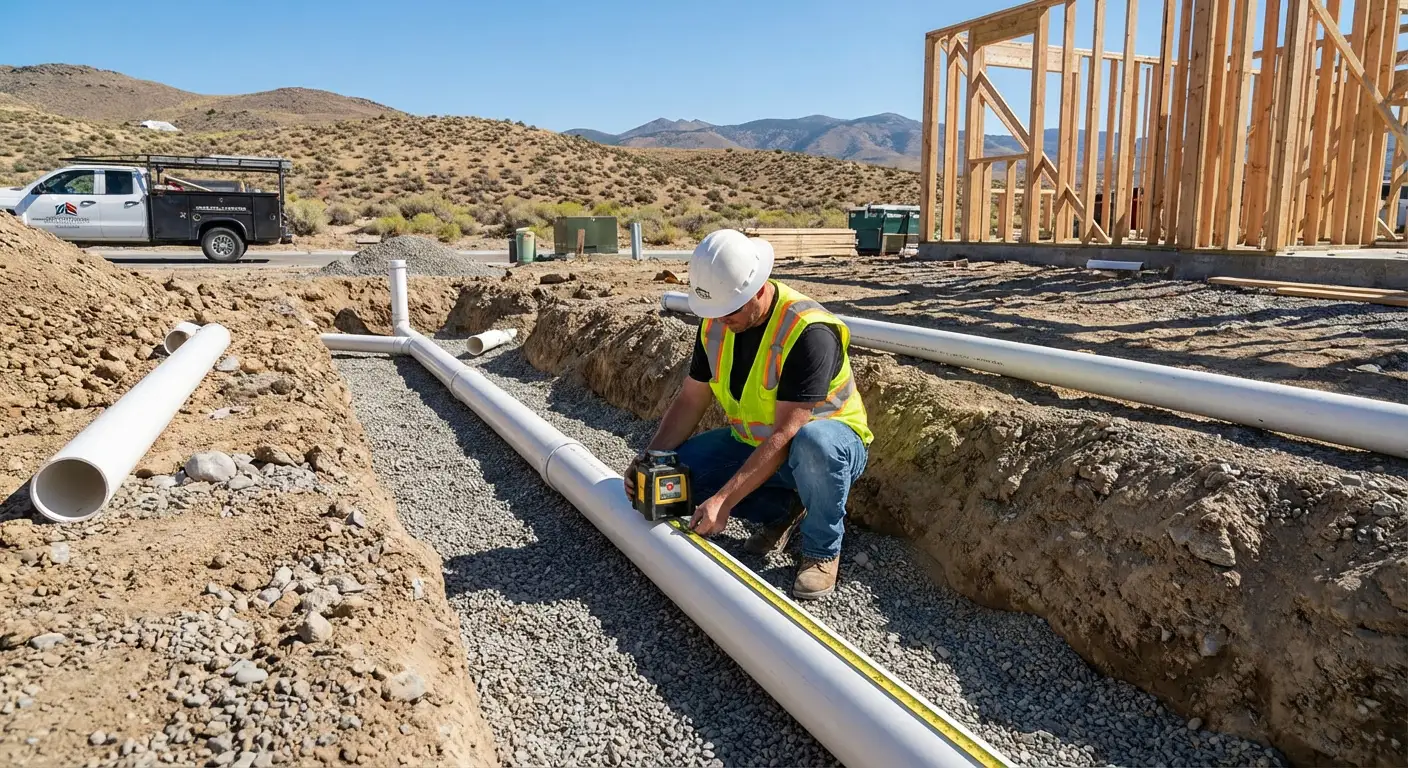
So here's the reality. If you're building something that lasts, that's excellent. Just don't treat pitch requirements like suggestions. Every inch of drop should have documentation. Every installation needs verification. And every code decision should be grounded in how the waste moves — not just how the pipe looked when you laid it.
When Gravity Works and When It Fails You
Most of the time, proper slope means your sewer line functions without issue. You install pipe, waste flows downhill — that's physics, not profit. The inspector doesn't care how deep you dug, only whether the pitch meets code and whether solids actually move.
But if that slope gets compromised? Different outcome entirely. Insufficient pitch can create standing water, especially if the installation didn't meet the standards laid out by UPC or local amendments. We saw this play out constantly with rushed builds. Plenty of contractors thought eyeballing the grade was sufficient — it wasn't. And when flow gets flagged during testing, the city expects to see proper fall documented unless you meet an exception like existing infrastructure constraints.
The Grade You Need to Hit
You can't fudge the measurements on pitch — that's just inviting backups and callbacks. But the minimum slope? That's typically mandated. Reno generally requires you to maintain grade on lines based on diameter and flow capacity.
Here's where that matters most:
- Residential laterals: Standard 4-inch lines need at least 1/4 inch per foot to keep solids moving without pooling.
- Smaller diameter pipes: Anything under 3 inches may require steeper pitch to maintain velocity and prevent clogs.
- Larger commercial runs: Six-inch or greater lines can sometimes function at 1/8 inch per foot, but only when flow volume supports it.
- Clay or cast iron replacements: Older materials often had different tolerances, so matching existing slope isn't always code-compliant.
- Cleanout access points: These don't change your slope requirement, but placement affects how you maintain grade through fittings.
When Code Compliance Gets Tricky
Want to pass your rough-in inspection? You'll need to prove the line maintains consistent fall — and that you didn't create low spots or reverse grades.
The inspector has three main checkpoints:
- You maintained minimum slope throughout the entire run
- You avoided bellies or sags where waste can accumulate
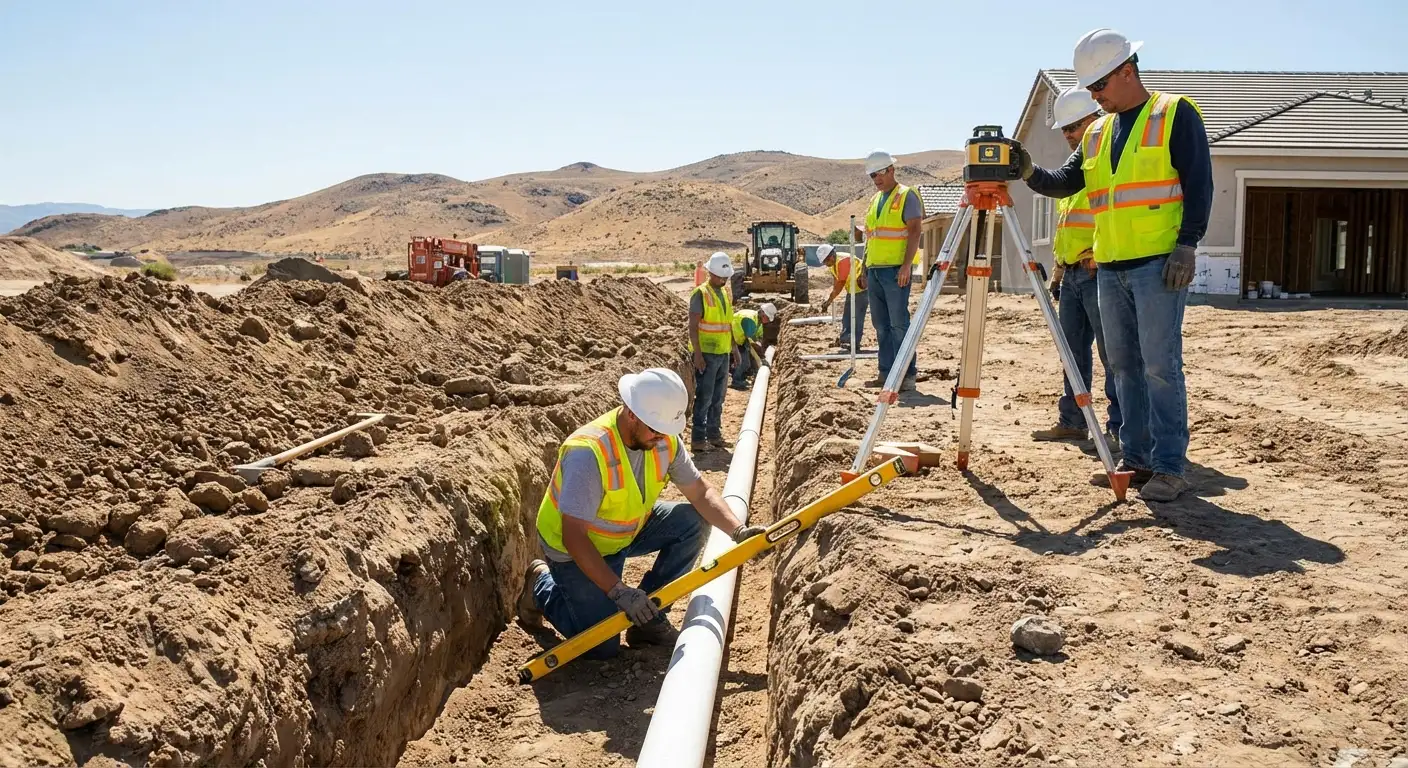
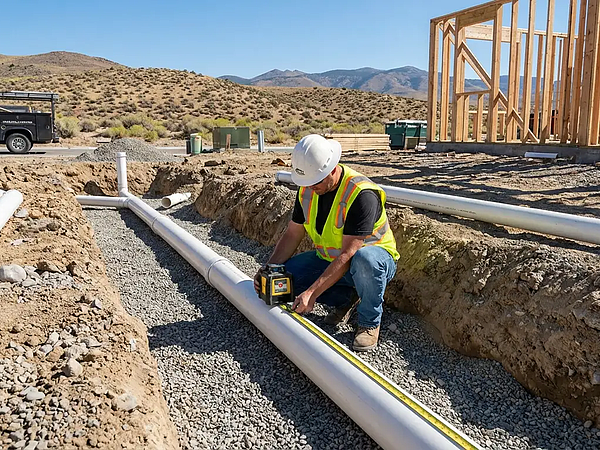
- You documented grade with a laser level or builder's transit, not just a hand level or guesswork
Fail one of those, and the approval falls apart. Even if the pipe technically drains when you run water through it. And if any portion of the line serves non-permitted structures? That section's off the table too. No partial sign-offs for your detached workshop, even if it shares the same trench.
Reno Has Soil Conditions That Complicate Everything
If your build site sits on expansive clay or unstable fill, there's a real risk your carefully graded line won't stay that way. Washoe County soils can shift, settle, or heave depending on moisture and compaction.
You'll need to account for bedding material and proper backfill techniques to maintain your slope long-term. Most residential and light commercial projects won't face major geotechnical hurdles — but those that do need to be strategic. Especially if they're running lines through areas with high groundwater or recent disturbance.
Your Inspection Outcome Depends on Your Documentation
Want to keep your project moving? Show your work. You'll need more than a few photos to back up your installation.
Here's what your records should include:
- The permit application with approved plans showing slope calculations
- Field measurements taken with calibrated instruments at multiple points
- Trench depth readings from your business account — wait, wrong list — from your site notebook
- Evidence of proper bedding material — receipts, delivery tickets, compaction tests
If the inspector shows up and finds inconsistencies, they won't just take your word for it. Mixing storm and sanitary lines is one of the fastest ways to fail. So if that drain you tied in serves both roof runoff and fixtures, you'd better have separation documented.
Where Most Builders Mess Up
Assuming Existing Grade Is Adequate
Trying to match old pipe that's been settling for decades? The city won't find that acceptable. Outdated installations often violate current standards or have developed sags. Most builders play it safe by surveying the run properly or bringing in a licensed plumber — and plenty stay on track by following best practices for excavation and bedding.
Forgetting to Account for Fittings
Don't wait until the pipe's in the ground to realize your wye or combo creates a low spot. If you lose elevation at connections, you're creating problems. If you overcompensate with excessive slope, you risk solids being left behind. Check grade at every fitting. It's tedious. It works.
Ignoring Cleanout Placement Impact
If you installed cleanouts without considering how they affect your slope continuity, that's a red flag area. If you didn't maintain fall through the fitting — or just didn't verify it with instruments — the inspector may red-tag it. Reference UPC Chapter 7 and don't guess. That's what experienced site supers are for.
Common Questions About Slope
Can I use a steeper slope than minimum?
The minimum grade? That's the floor, not the ceiling. You can exceed it — as long as velocity doesn't cause problems. But excessive pitch? That can strip water from solids and create different issues, so moderation matters.
How much slope do I actually need?
If your line is standard residential diameter, 1/4 inch per foot is the baseline. Go ahead and maintain that throughout. If you're running larger commercial pipe with high flow, you might get away with less — but only with engineering backup.
Does Reno allow flexible pipe?
Sort of. ABS and PVC are standard, but the material doesn't change your slope requirement. The grade you maintain is what matters — provided the pipe type is approved for your application and soil conditions.
When to Bring in Expertise
If your site includes multiple elevation changes, challenging soil, or anything connecting to aging infrastructure, you're in territory where winging it gets expensive.
A licensed professional helps you:
- Calculate which slope is adequate and which creates future problems
- Apply bedding and backfill standards correctly for long-term stability
- Separate different waste streams cleanly and legally
- Handle inspection scheduling and documentation
- Keep the building department satisfied
It's not just about passing inspection this month. It's about setting up infrastructure that functions properly and stays compliant for decades. Professional grading expertise ensures your sewer lines maintain proper pitch throughout the entire run. Proper underground utilities installation requires attention to detail that goes beyond basic trenching. Many successful projects benefit from comprehensive construction services that address both immediate installation needs and long-term performance. If you're curious how other builders have handled these kinds of site challenges, look at projects that prioritized engineering input from day one.
Pitch Matters More Than You Think
Installing sewer line isn't the hard part. Maintaining proper grade — and proving you did it when the inspector arrives — that's where projects get delayed. There's no excuse for sloppy work when the requirements are clearly published. But there's also no forgiveness when you ignore the physics.
Getting slope right the first time means waste flows, inspections pass, and your build stays on schedule. Every degree of pitch you verify now is one less callback you'll face later. Reno's codes exist for a reason, and gravity doesn't negotiate.
Let’s Get Your Sewer Line Slope Right
We know how much is riding on a properly installed sewer line—your schedule, your budget, and your peace of mind. If you want to avoid costly mistakes and keep your Reno project moving, let’s make sure your slope and documentation are handled by pros who know the codes inside and out. Call us at 775-997-8271 to talk through your site, or request a quote and we’ll help you get it right the first time.
‹ Back
Recent Posts
-
Are Retaining Walls in Reno Needed for Steep Lots
March 26, 2026
-
Installing a New Water Service Line in Reno Homes
March 12, 2026
-
How Sewer Line Slope Requirements Work in Reno Builds
February 26, 2026
-
When Footing Depth in Reno Needs To Be Increased
February 12, 2026
-
Is Grading on Reno Construction Sites Done Before Utilities
January 29, 2026