Are Retaining Walls in Reno Needed for Steep Lots
Most property owners think steep lots are just about the view. Great scenery, tough build. But the ground beneath your feet tells a different story — and if you're not listening, you're setting yourself up for expensive problems. Slopes don't just sit there looking pretty. They shift, erode, and drain in ways that can undermine your foundation, flood your yard, or send half your landscaping downhill after one heavy storm.
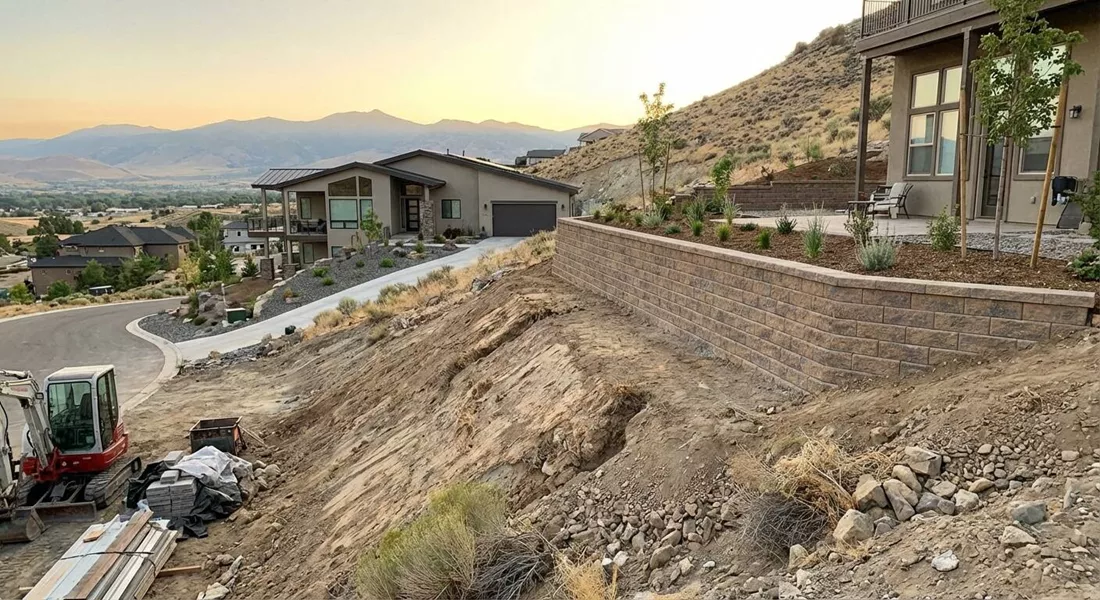
So here's what matters. If you're building on elevation in Reno, that's fantastic. Just don't pretend gravity isn't working against you. Every inch of slope should be accounted for. Every drainage plan needs backup. And every construction decision should be grounded in how the land behaves — not just how it photographs.
When Soil Decides to Move
Most of the time, flat ground stays put. You build on it, plant on it, park on it — no drama. But steep terrain? That's a different game. Gravity pulls constantly, and without something holding it back, soil will migrate downhill. Reno's high desert climate makes this worse. Dry spells bake the ground hard, then sudden storms hit and turn everything loose.
If that slope gets destabilized, you're not just losing dirt. You're risking structural damage, drainage failures, and erosion that eats into usable space. We've seen properties where entire sections of yard disappeared after a single season because no one thought to reinforce the grade. And when that happens, the fix costs more than prevention ever would have. Professional grading can help stabilize slopes and prevent soil migration before it becomes a costly problem.
The Support That Keeps Things Level
You can't flatten a hillside by wishing it flat. But you can carve out usable space and hold the rest in place — that's what retaining walls do. They're not decorative. They're load-bearing structures designed to resist thousands of pounds of lateral pressure from soil, water, and freeze-thaw cycles.
Here's where they make the biggest difference:
- Terraced yards that turn unusable slopes into gardens, patios, or play areas
- Driveway cuts that let you access garages without sliding into the street
- Foundation protection that keeps soil from pressing against basement walls or crawl spaces
- Erosion control that stops gullies from forming and washing out landscaping
- Drainage channels built into the wall system to redirect runoff before it pools
Reno's Terrain Doesn't Play Nice
Reno sits at the base of the Sierra Nevada, and plenty of residential lots climb straight into the foothills. That means steep grades, rocky subsoil, and weather that swings from bone-dry summers to winter snow and spring melt. All of that puts pressure on slopes.
If your lot drops more than a few feet over a short distance, you're already in retaining wall territory. If you see exposed roots, cracked pavement, or water pooling where it shouldn't, the land is telling you it needs help. Ignoring those signs doesn't make them go away. It just means the problem gets worse — and more expensive — every season. Proper flood and erosion control measures become essential on steep terrain.
What the City Wants to See
Reno and Washoe County don't let you throw up a wall and call it good. There are height limits, setback rules, and engineering requirements depending on how much load the wall will carry. Anything over four feet usually triggers a permit. Anything supporting a structure or public right-of-way? You'll need stamped plans from a licensed engineer.
Here's what you'll need to provide:
- Site plans showing existing grade and proposed changes
- Drainage details that prove water won't back up or flood neighboring properties
- Structural calculations for walls over a certain height or load
- Material specs that meet local frost and seismic standards
- Inspection schedules so the city can verify the work as it progresses
Materials That Actually Hold Up
Not all retaining walls are created equal. Timber looks rustic but rots in a decade. Poured concrete lasts forever but costs a fortune. Modular block systems split the difference — durable, affordable, and easier to install without heavy equipment.
Your material choice depends on the height of the wall, the soil type, and how much water you're managing. Sandy soil drains fast but doesn't compact well. Clay holds water and expands when it freezes. Rock and caliche are stable but a nightmare to excavate. A good contractor will test your soil and design the wall accordingly — not just pick whatever's on sale at the supply yard. Proper excavation is critical for establishing a stable base for any retaining wall system.
Drainage Isn't Optional
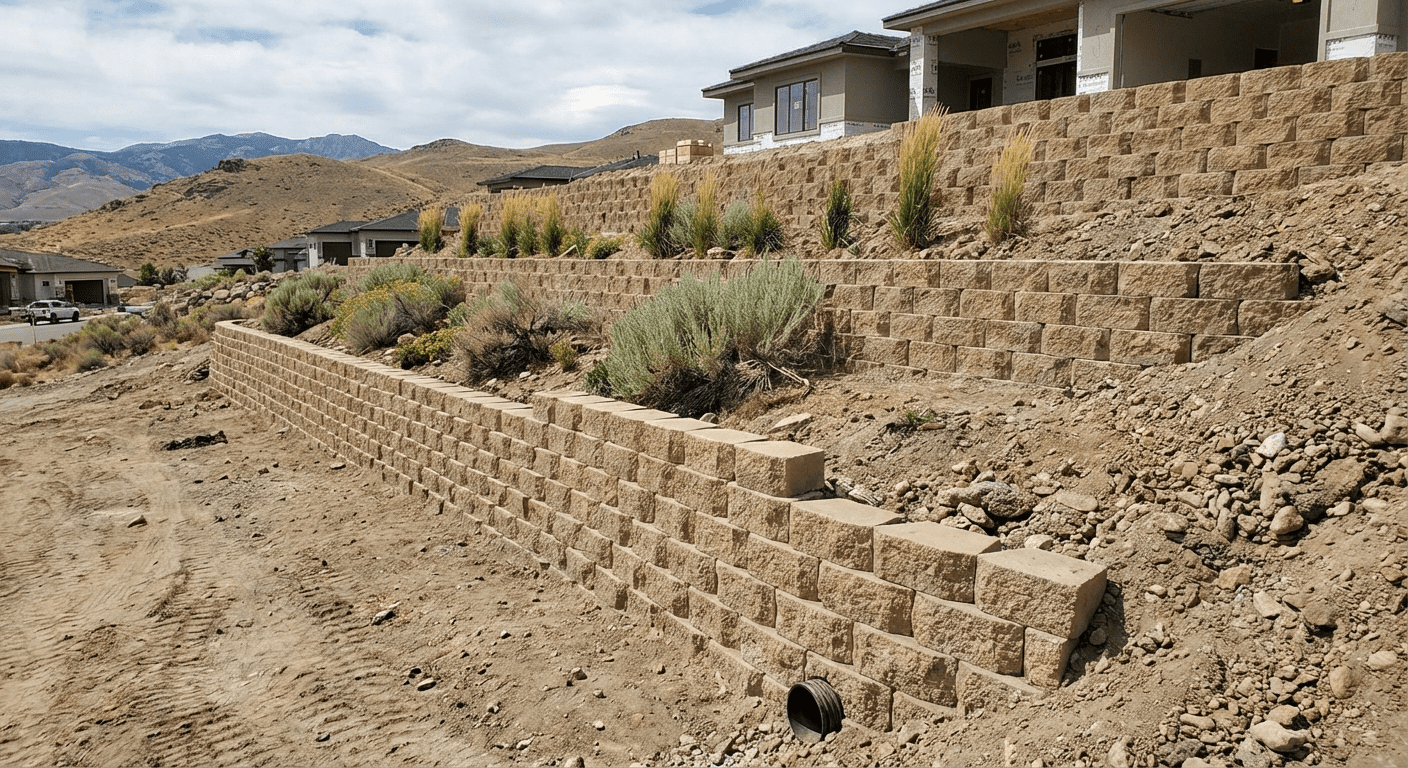
The number one reason retaining walls fail? Water. When runoff gets trapped behind the wall, it builds pressure. That pressure cracks the structure, shifts the footing, or causes the whole thing to bow outward. In Reno, where storms can dump inches in a few hours, drainage isn't a nice-to-have. It's the difference between a wall that lasts thirty years and one that fails in three.
Every retaining wall should include backfill drainage, weep holes, or a perforated pipe system that moves water away from the structure. If your contractor skips this step, find a new contractor. No exceptions. Installing proper underground utilities and drainage systems protects the structural integrity of retaining walls.
Where Property Owners Go Wrong
Plenty of people try to DIY retaining walls or hire the cheapest bid without checking credentials. That's how you end up with a wall that leans, cracks, or collapses the first time it rains. Engineering matters. Compaction matters. Proper footing depth matters. Cutting corners doesn't save money — it just moves the expense to the repair phase.
Here's what trips people up most often:
- Skipping the permit and hoping no one notices
- Using the wrong base material or not compacting it enough
- Ignoring drainage and assuming the soil will just absorb everything
- Building too close to property lines without easement agreements
- Choosing materials that look good but aren't rated for the load
When to Bring in the Pros
If your slope is mild and you're just terracing a flower bed, maybe you can handle it yourself. But if you're cutting into a hillside, supporting a driveway, or building anything over three feet tall, this isn't a weekend project. You need someone who understands soil mechanics, drainage design, and local code.
A qualified contractor will survey the site, test the soil, calculate the load, and design a system that won't fail. They'll pull the permits, schedule inspections, and warranty the work. That peace of mind is worth every dollar — especially when the alternative is a collapsed wall and a lawsuit from your downhill neighbor. Experienced professionals who handle footings and foundations understand the structural requirements for retaining walls on steep lots.
Steep Lots Need Real Solutions
Building on elevation in Reno isn't impossible. But it's not something you wing. The terrain demands respect, and the consequences of ignoring that are expensive, dangerous, and entirely avoidable. Retaining walls aren't just landscaping features. They're structural systems that protect your investment and keep your property functional. Professional services ensure that steep lot construction is done right the first time.
At the end of the day, you either engineer the slope or the slope engineers you. One costs money upfront. The other costs more later — along with your time, your safety, and possibly your home's resale value. If you're serious about building smart on steep ground, start with the foundation that holds it all together.
Let's Secure Your Slope the Right Way
We know how challenging Reno’s terrain can be, but with the right approach, your steep lot can be both beautiful and secure. Let’s work together to protect your property and make the most of your space—no shortcuts, just solid solutions. Give us a call at 775-997-8271 or request a quote today and see how we can help you build with confidence.
‹ Back
Recent Posts
-
Are Retaining Walls in Reno Needed for Steep Lots
March 26, 2026
-
Installing a New Water Service Line in Reno Homes
March 12, 2026
-
How Sewer Line Slope Requirements Work in Reno Builds
February 26, 2026
-
When Footing Depth in Reno Needs To Be Increased
February 12, 2026
-
Is Grading on Reno Construction Sites Done Before Utilities
January 29, 2026